Where three continents meet

The everyday wonders
of Israel's skies

Israel sits at the junction of three faunal worlds — Palaearctic, Afrotropical and Oriental. Its butterflies are a small, winged record of that crossing. Here are five you can meet almost anywhere: common, far-wandering, and quietly beautiful.

0 continents
meet here
0 species in
this guide
0 broods in a
single year
mm — the
largest wingspan

The five

Common, but never ordinary

These are the species most frequently recorded in Israel's structured monitoring — wide-ranging, many-brooded, and at home even in disturbed ground.

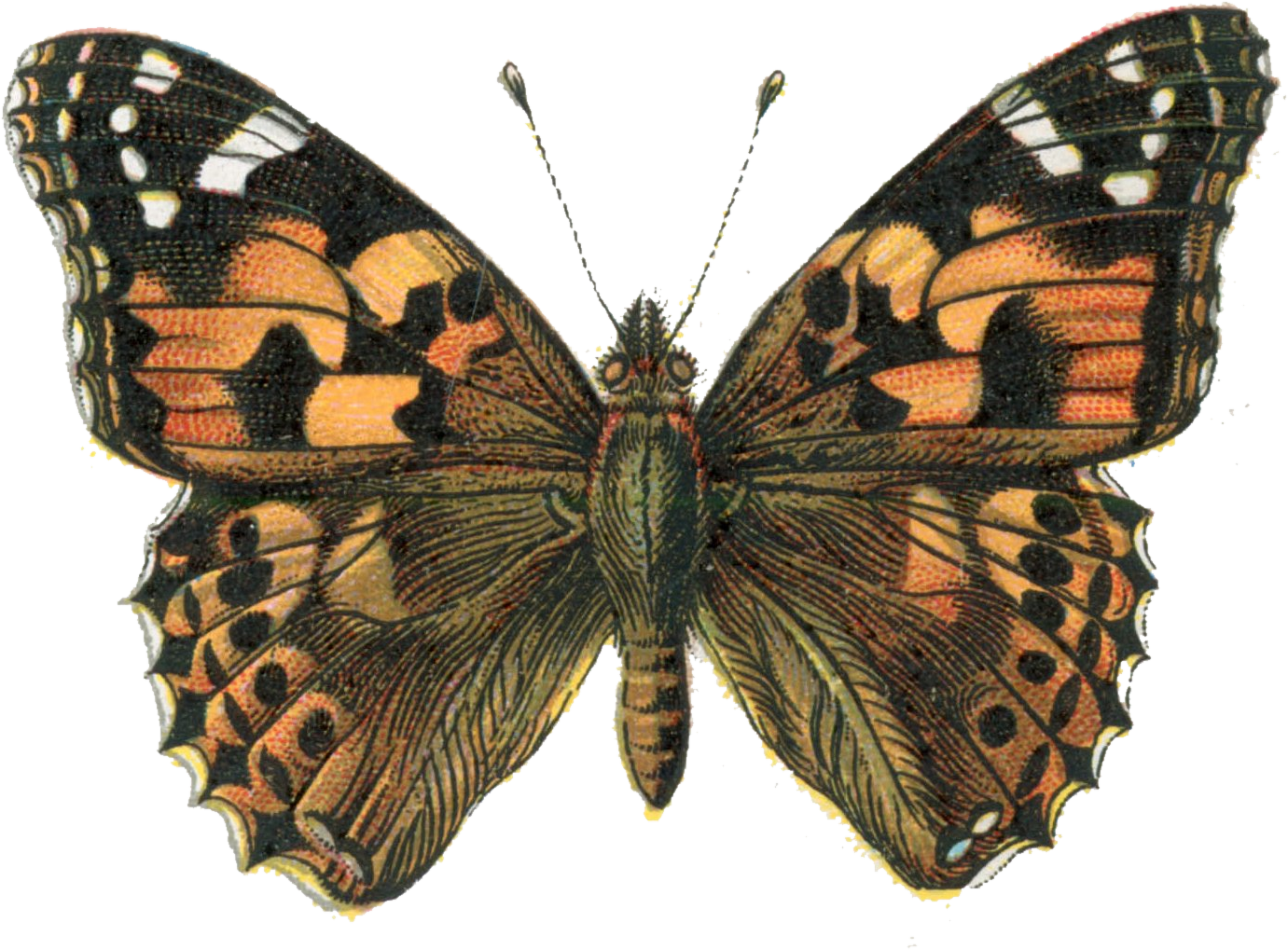
01 Painted Lady, Vanessa cardui — orange-brown wings with black-and-white tips

Painted Lady

Vanessa cardui · Nymphalidae

  • Wingspan45–70 mm
  • FlightYear-round; peaks spring & autumn
  • HabitatCountryside, gardens, scrub, farmland

The single most abundant butterfly in Israeli surveys, and one of the most widespread insects on Earth. A long-distance migrant, it breeds continuously across the Mediterranean and moves north and south with the seasons. Orange-brown above with black-and-white tips; an underside mosaic of browns and whites. Caterpillars favour thistles and mallows.
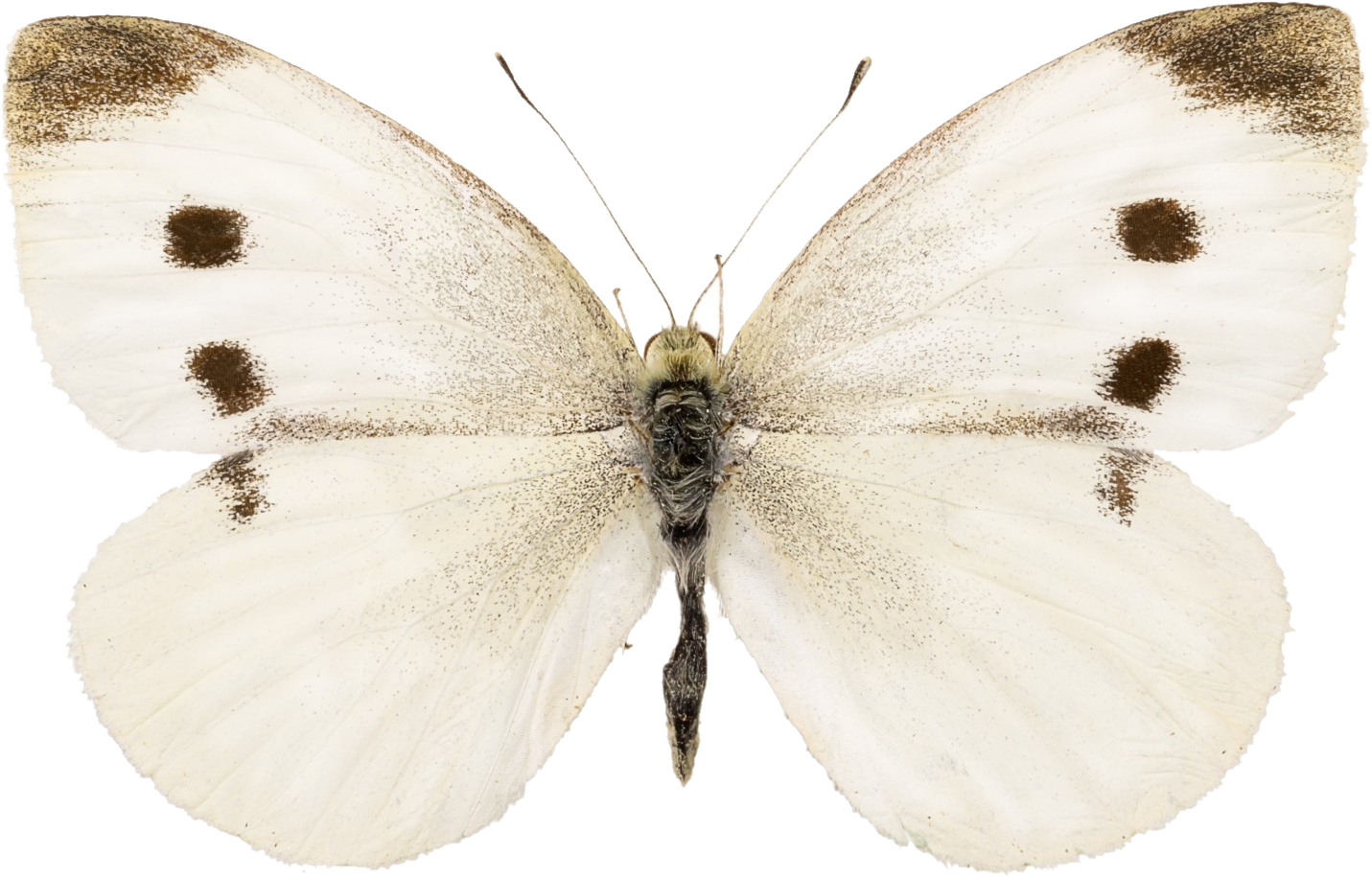
02 Small White, Pieris rapae — white wings with dark forewing tips and two black spots

Small White

Pieris rapae · Pieridae

  • Wingspan38–57 mm
  • FlightFebruary–November, many broods
  • HabitatGardens, farmland, verges, waste ground

Ubiquitous wherever brassicas grow — a familiar garden visitor and minor crop pest. White wings carry one or two black forewing spots (females two, males one); the undersides are a pale yellow-green. Endlessly adaptable, from the coast to the semi-arid south. Larvae feed on cabbage, mustard and wild crucifers.

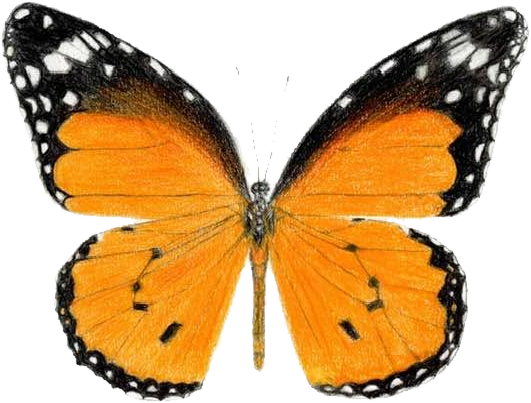
03 Plain Tiger, Danaus chrysippus — bold orange wings with black, white-spotted borders

Plain Tiger

Danaus chrysippus · Nymphalidae

  • Wingspan70–80 mm
  • FlightYear-round
  • HabitatOpen ground, gardens, dry scrub, coast

The "African Monarch" — bold orange-and-black and impossible to miss. It is chemically defended: larvae sequester toxins from milkweeds, and the adult's bright warning colours keep predators at bay. Several forms occur; adults roost communally and make local migrations, and the species is a model for mimics across its range.

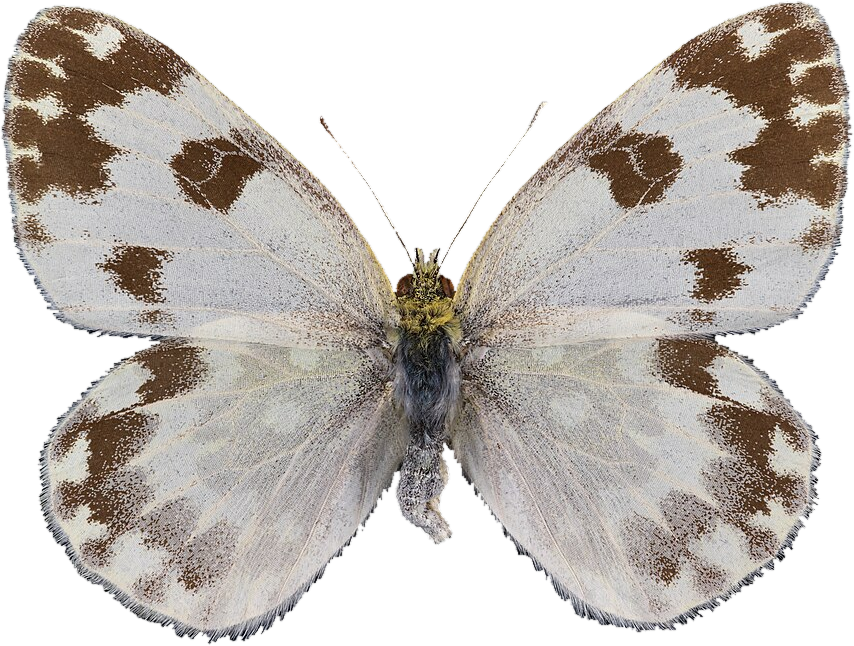
04 Bath White, Pontia daplidice — white wings with olive-brown chequered markings

Bath White

Pontia daplidice · Pieridae

  • Wingspan40–50 mm
  • FlightMarch–October, 3–4 broods
  • HabitatOpen, dry, arid country; rocky slopes; steppe

A common white of Israel's open, arid landscapes — easy to overlook among other whites until you catch the green-chequered mosaic under the hindwing, olive and white scales tiled together. A strong, far-wandering flier whose numbers swell in late summer. Larvae feed on wild crucifers like Moricandia and Raphanus.

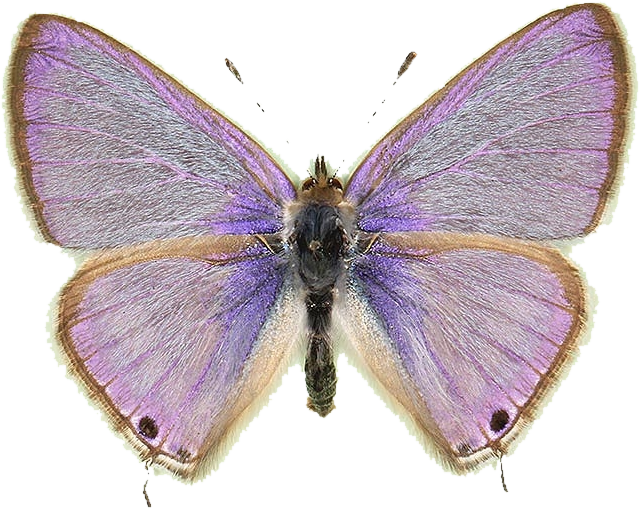
05 Long-tailed Blue, Lampides boeticus — violet-blue wings with slender tails and eye-spots

Long-tailed Blue

Lampides boeticus · Lycaenidae

  • Wingspan29–38 mm
  • FlightYear-round in warm areas; many broods
  • HabitatScrub, gardens, field edges — wherever legumes grow

One of the most cosmopolitan butterflies on Earth, ranging from Europe to Australia, and among Israel's most widespread small blues. Males shine violet-blue; females are browner with a blue flush at the base. Two slender tails and eye-spots form a false head that deflects predator strikes. Larvae develop inside legume pods — including peas and beans.

Why they matter

Butterflies are among the most sensitive barometers of a landscape's health — quick to respond to changes in climate, vegetation and land use. Israel's position at the meeting point of three continents makes its small fauna unusually rich, and unusually worth watching.

This guide is a starting point, not a finish line: five species you're likely to see in a single afternoon. There are more than two hundred others — and we'll keep adding them.

Look up more often. The beauty is already there.